Numbers don't Lie
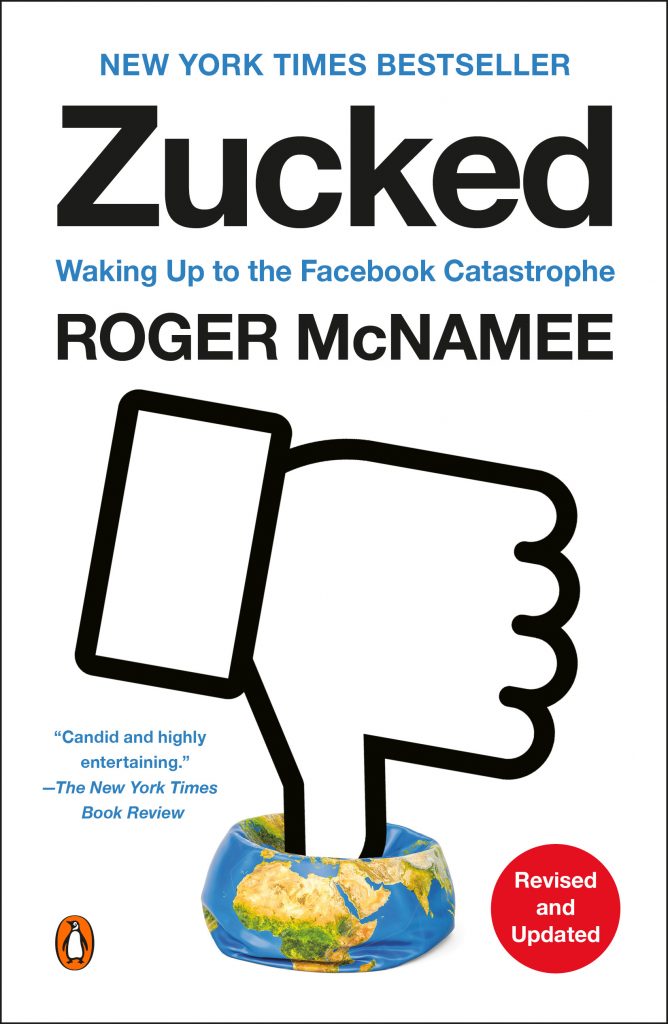
Waking Up to the Facebook Catastrophe
Roger McNamee
Published: 2019
Book summary
This summary has been generated by Infomaniak's Euria.
Overview:
Zucked: Waking Up to the Facebook Catastrophe by Roger McNamee is a critical insider account from a former mentor and early investor in Facebook. McNamee, a Silicon Valley venture capitalist, recounts how he came to recognize the profound societal harm caused by Facebook’s business model — particularly its reliance on surveillance, addictive design, and algorithmic amplification of divisive content.
He argues that Facebook’s pursuit of engagement and advertising revenue has eroded democracy, privacy, and social cohesion — famously noting, “Facebook has managed to connect 2.2 billion people and drive them apart at the same time.” McNamee details his failed attempts to warn Mark Zuckerberg and Sheryl Sandberg about these dangers, and calls for urgent reform, regulation, and ethical responsibility from tech leaders.
The book serves as both a personal reckoning and a public warning about the unchecked power of social media platforms.
Key Themes & Takeaways:
🔑 Key Themes
-
The Toxic Business Model
Facebook’s core revenue engine — surveillance capitalism — relies on harvesting user data to maximize attention and ad targeting. This creates a feedback loop that prioritizes outrage, polarization, and engagement over truth or well-being. -
Addiction by Design
The platform is engineered to be addictive, using behavioral psychology and algorithms to keep users scrolling. McNamee compares this to casino mechanics — designed to exploit human vulnerabilities. -
Democracy Under Siege
Facebook’s open platform and lack of content moderation allowed foreign actors (e.g., Russian operatives) and domestic extremists to manipulate public opinion, especially during elections. McNamee highlights how misinformation and divisive content spread faster than factual content. -
Failure of Leadership
Despite internal warnings and external criticism, Zuckerberg and Sandberg largely ignored ethical concerns, choosing growth and shareholder value over societal responsibility. McNamee recounts his own frustrated attempts to influence them. -
The Myth of “Connecting People”
While Facebook claims to bring people together, McNamee argues it has instead deepened societal divisions — connecting billions while driving them apart through algorithmic amplification of outrage and tribalism. -
Silicon Valley’s Moral Blind Spot
McNamee critiques the tech industry’s culture of “move fast and break things,” arguing that it has ignored long-term social consequences in pursuit of innovation and scale.
🎯 Key Takeaways
-
Ethics Must Be Built In, Not Bolted On
Tech platforms must prioritize user well-being and democratic integrity from the start — not as an afterthought. -
Regulation Is Necessary
McNamee calls for stronger antitrust enforcement, data privacy laws, and oversight of algorithms — arguing self-regulation has failed. -
Users Are Not Customers — They’re the Product
Facebook’s real customers are advertisers. Users are the data source. This misalignment of incentives is at the heart of the problem. -
Insiders Have a Responsibility
As someone who helped shape Facebook’s early success, McNamee believes those with insider knowledge have a moral duty to speak out — even if it means turning against former allies. -
“Zuck” Is Not the Only Problem
While Zuckerberg is central to the narrative, McNamee also critiques the broader tech ecosystem — venture capital, Silicon Valley culture, and the lack of accountability.
💬 Notable Quote:
“Facebook has managed to connect 2.2 billion people and drive them apart at the same time.”
McNamee’s book is both a warning and a call to action — urging users, regulators, and tech leaders to confront the real-world consequences of unregulated social media.
Sources: The Guardian, Kirkus Reviews, NY Times, Penguin Random House